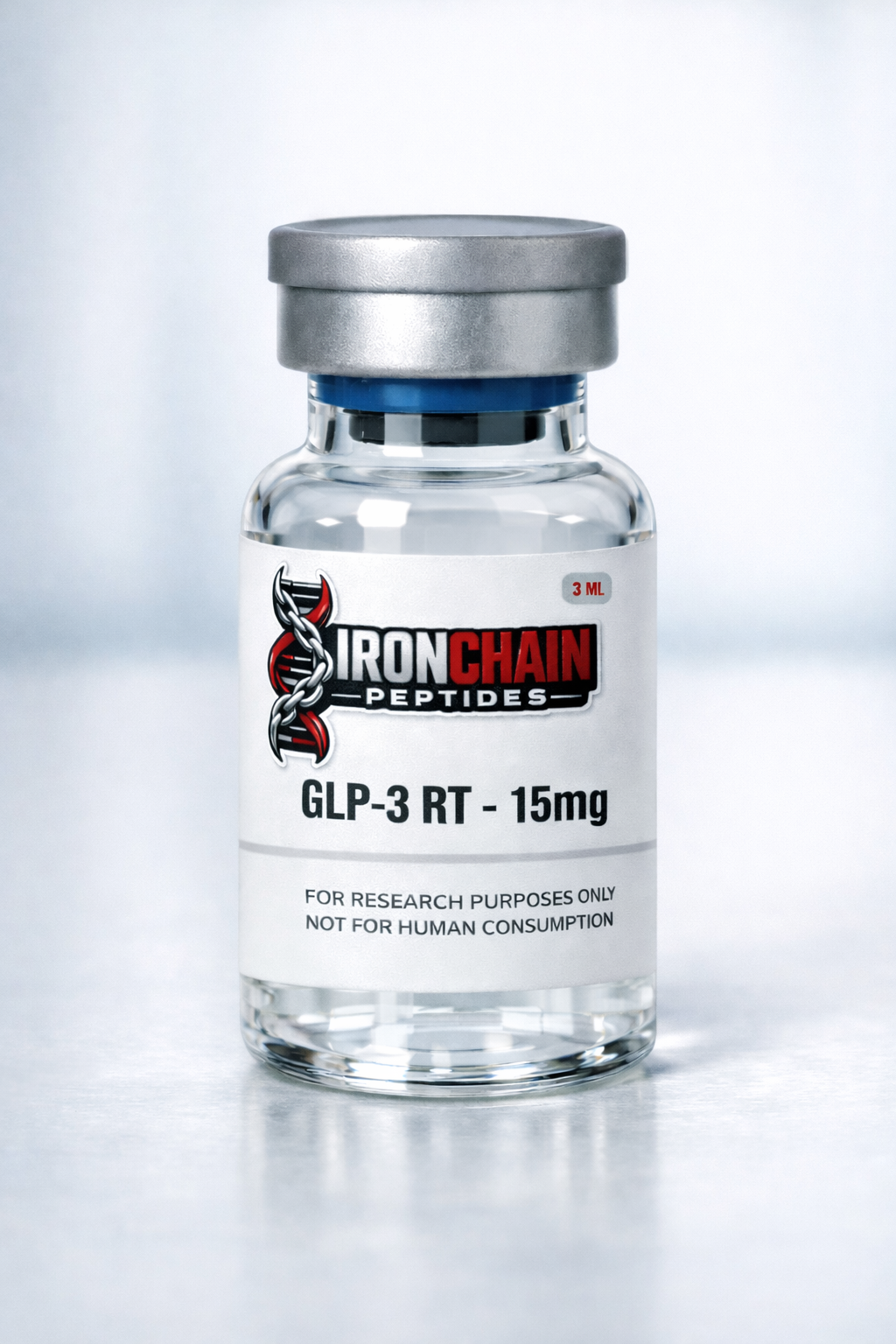
 Image 1 of 1
Multi-Receptor Research Compound
GLP3-RT is a synthetically engineered research compound developed for use in controlled laboratory environments. Within research settings, this compound is examined for its interaction across multiple receptor pathways, where clearly defined materials and reproducible characteristics are essential for accurate experimental outcomes.
Researchers study GLP-3 RT as a tri-agonist compound with activity at GLP-1, GIP, and glucagon receptor sites at the molecular level. Because research involving coordinated receptor signaling requires precision and consistency, this compound supports structured in vitro workflows designed to evaluate receptor engagement patterns and downstream signaling behavior.
Rather than focusing on isolated, single-pathway activation, laboratories incorporate GLP-3 RT into experimental models that examine how simultaneous receptor interaction may influence signaling cascades under tightly controlled conditions.
Research Applications
In laboratory studies, GLP-3 RT is utilized to explore:
Receptor binding dynamics
Multi-pathway signaling coordination
Molecular activation profiles
Comparative receptor response behavior
Controlled pathway interaction modeling
Researchers value multi-receptor compounds when designing experiments that aim to observe coordinated biological signaling rather than independent receptor activity. GLP-3 RT allows laboratories to evaluate signaling relationships within a unified experimental framework while maintaining structured, repeatable study design parameters.
Mechanism and Molecular Profile
GLP-3 RT is commonly characterized as a single-molecule “triple agonist” engineered to activate GLP-1, GIP, and glucagon receptors.
Published preclinical development work describes GLP-3 RT as a 39-amino-acid peptide that is conjugated to a C20 fatty diacid moiety, a design approach used to support a prolonged pharmacokinetic profile by increasing protein binding and slowing clearance.
Additionally, peer-reviewed clinical research has evaluated GLP-3 RT in randomized, placebo-controlled phase 2 studies, which provides a structured investigational context for how the compound has been studied in humans (without changing its status as a research compound in many supply channels).
Laboratory Formulation and Preparation
GLP-3 RT is supplied as lyophilized (freeze-dried) powder to support compound stability and flexible laboratory preparation. This format is widely used in research environments because it helps maintain structural integrity during storage and transport while allowing laboratories to prepare solutions according to internal experimental protocols.
Prior to use in research procedures, the material is reconstituted using appropriate laboratory-grade solvents under controlled conditions. Careful preparation and standardized handling procedures help preserve compound integrity and support reliable data generation across repeated studies
Storage Recommendations
For optimal stability, the dry material should be stored in a cool, dry environment away from direct light exposure. Proper storage practices help maintain compound integrity throughout the research lifecycle and minimize variability related to environmental factors.
Quality Standards
Each batch of GLP-3 RT is produced under stringent quality control standards to support research consistency and supply reliability. Independent analytical testing verifies purity and structural conformity prior to release.
Research Use Statement
GLP-3 RT is supplied strictly for laboratory research purposes. It is not intended for human or veterinary use.